
Kate Atkinson
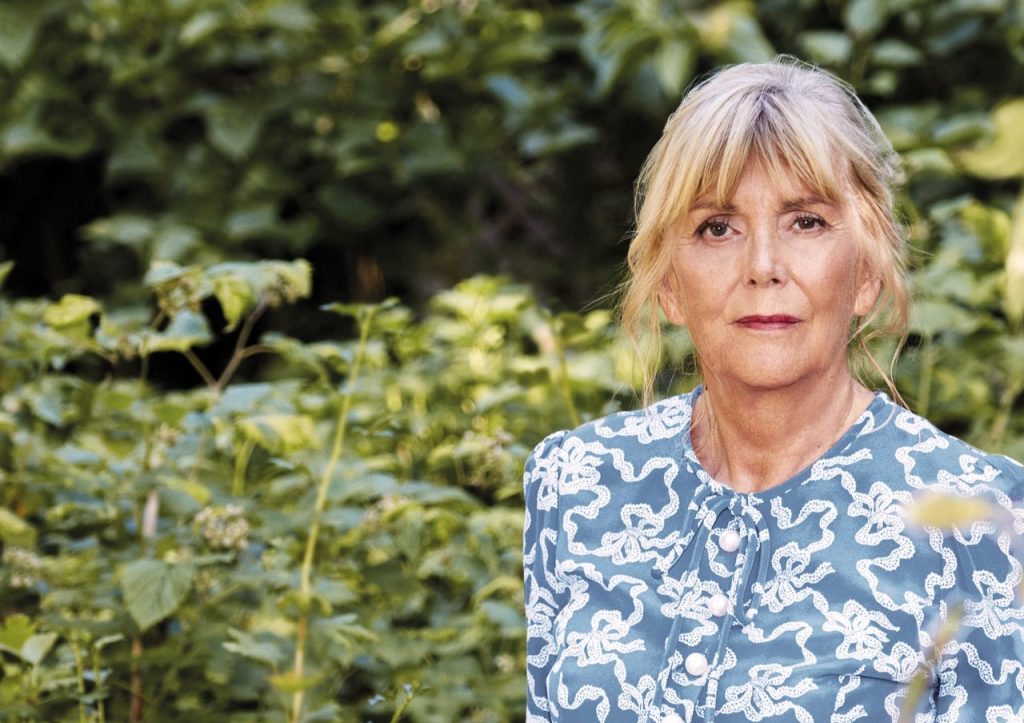
Award-winning novelist Kate Atkinson has supported Karuna since a fundraiser knocked on her door in 1997.
On a dark and stormy night…a stranger knocked on my door. That’s a slight exaggeration as I don’t recall it being stormy, but what was unusual about this story is that I invited that stranger in. This is so out of character for me – I’m reluctant to let even people I know over my doorstep. Yet, within minutes, a young man was sitting on my sofa ‘selling’ the idea of Karuna to me. (I’ve heard this story from several supporters of Karuna since. I don’t know how Karuna go about recruiting their fundraisers but whatever it is, it clearly works!)
That was twenty-nine years ago. I’ve been supporting Karuna one way or another ever since.
What was it, I wonder, that drew me to Karuna in the first place? Certainly, the refreshingly genuine aspects of that young man’s character but also because he had the ability to convey the essence of Karuna’s work, as true now as it was when they came into existence in 1980.
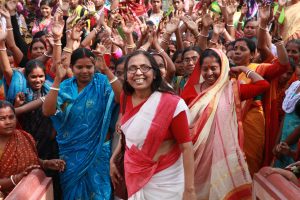
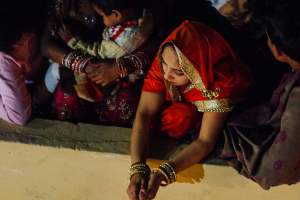
Karuna works with the world’s most dispossessed and disadvantaged people at a grassroots level with providers on the ground who understand local communities and local needs. It’s not top-heavy with bureaucracy and not infected with a sense of saviourship but instead is driven by a real humanitarian desire to improve peoples’ lives.
I remember that young fundraiser telling me that one of the projects they were involved with at the time was supplying sewing-machines to women in northern India, then teaching them how to use them so that they were able to earn a dignified living and lift themselves out of poverty. Yes, it’s the “old teach a man to fish” adage – but also so true. I think it was this simple and effective approach that first attracted me. Dignity is at the very core of Karuna’s approach to helping the vulnerable and the excluded.
The work has obviously expanded since those early days. Karuna is active now in Nepal and Bangladesh as well as India and the nature of the work itself is more widespread, given the problems of climate change, affecting so much of that part world.
Nonetheless, a significant part of its work remains dedicated to concerns that are close to my heart – girls and women. Gender equality in education is the way out of poverty, be it learning to fish, operate a sewing-machine or, most important of all, supporting girls to remain in school.
Maintaining a girl’s education doesn’t just mean direct support. It means instigating programmes with more multifaceted approaches, tackling the poverty at the root of the curtailment of education and cultivating with compassion and understanding in a wider circle – fathers, families, communities.
My father grew up with poverty and abuse and was cruelly denied an education and so he made sure that I had an excellent one. I am one of the lucky ones and for that I am forever grateful. I believe that education is a gift deserved by every girl everywhere in the world no matter her circumstances. No, not a gift – a right, something that Karuna believes in and helps to put into practice.